Mother Jones at the Colorado Labor Wars

February 9th, 2011
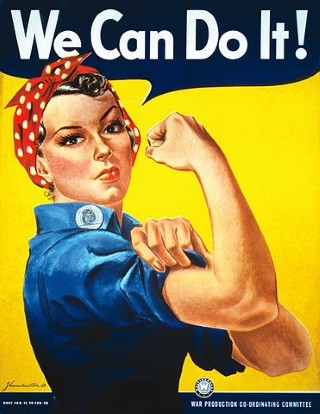
Mother Jones poster, U.S. Dept. of Labor, 2010

Mary Harris “Mother” Jones fought to bring a decent life to American workers’ families. In this pursuit she traveled the country, North and South, East and West. In 1903, the United Mine Workers’ (UMW) executive board asked her to check on the conditions of coal miners in Colorado. In her autobiography, Mother Jones told how she went undercover:1

I … got myself an old calico dress, a sunbonnet, some pins and needles, elastic and tape and such sundries, and went down to the southern coal fields of the Colorado Fuel and Iron Company.

As a peddler, I went through the various coal camps, eating in the homes of the miners, staying all night with their families. I found the conditions under which they lived deplorable. They were in practical slavery to the company, who owned their houses, owned all the land, so that if a miner did own a house he must vacate whenever it pleased the land owners. They were paid in scrip instead of money so that they could not go away if dissatisfied. They must buy at company stores and at company prices. The coal they mined was weighed by an agent of the company and the miners could not have a check weighman to see that full credit was given them. The schools, the churches, the roads belonged to the Company. I felt, after listening to their stories, after witnessing their long patience that the time was ripe for revolt against such brutal conditions.

In November 1903, many hard metal miners in Colorado were already on strike.2 And the mining companies’ man, the Republican James Peabody, had won the governorship in the last election, when the Democratic and Populist candidates split the progressive vote. Gov. Peabody promised to make Colorado “safe for investments”, and backed a corporate vigilante campaign to wipe out the hard metal miners’ union, the Western Federation of Miners (WFM). That campaign marked what came to be known as the “Colorado Labor Wars.” In this atmosphere, on November 9th, the Colorado coal miners struck. But a few weeks later the mine operators of the northern coal fields yielded, and UMW headquarters called a convention in Louisville to end the strike in those northern fields. Mother Jones went to Louisville to stop that action, and the miners called on her to speak:

“Brothers,” I said, “You English speaking miners of the northern fields promised your southern brothers, seventy per cent of whom do not speak English, that you would support them to the end. Now you are asked to betray them, to make a separate settlement. You have a common enemy and it is your duty to fight to a finish. The enemy seeks to conquer by dividing your ranks, by making distinctions between North and South, between American and foreign. You are all miners, fighting a common cause, a common master. The iron heel feels the same to all flesh. Hunger and suffering and the cause of your children bind more closely than a common tongue. I am accused of helping the Western Federation of Miners, as if that were a crime, by one of the National board members. I plead guilty. I know no East or West, North nor South when it comes to my class fighting the battle for justice. If it is my fortune to live to see the industrial chain broken from every workingman’s child in America, and if then there is one black child in Africa in bondage, there shall I go.”

The delegates rose en masse to cheer. The vote was taken. The majority decided to stand by the southern miners, refusing to obey the national President.

UMW president John Mitchell kept trying to get the miners of the northern fields to go back to work, and succeeded at last, when he threatened to cut off their support. Though she felt that the strike in the southern fields would now be lost, Mother Jones stayed there to fight for it. But Gov. Peabody wrote an order banishing her from the state, and sent members of the militia to take her to La Junta to take the next train out of Colorado. But Mother Jones, with thanks to a sympathetic railroad engineer, instead took the next train in to Denver:

In Denver I got a room and rested a while. I sat down and wrote a letter to the governor, the obedient little boy of the coal companies.

“Mr. Governor, you notified your dogs of war to put me out of the state. They complied with your instructions. I hold in my hand a letter that was handed to me by one of them, which says ‘under no circumstances return to this state.’ I wish to notify you, governor, that you don’t own the state. When it was admitted to the sisterhood of states, my fathers gave me a share of stock in it; and that is all they gave to you. The civil courts are open. If I break a law of state or nation it is the duty of the civil courts to deal with me. That is why my forefathers established those courts to keep dictators and tyrants such as you from interfering with civilians. I am right here in the capital, after being out nine or ten hours, four or five blocks from your office. I want to ask you, governor, what in Hell are you going to do about it?”

I called a messenger and sent it up to the governor’s office. He read it and a reporter. who was present in the office at the time told me his face grew red.

“What shall I do?” he said to the reporter. He was used to acting under orders. “Leave her alone,” counseled the reporter. “There is no more patriotic citizen in America.”

Cripple Creek circa 1900

Mother Jones described the scene around Cripple Creek, Colorado, the center of the hard metal strike:

All civil law had broken down in the Cripple Creek strike. The militia under Colonel Verdeckberg said, “We are under orders only from God and Governor Peabody.” Judge Advocate McClelland when accused of violating the constitution said, “To hell with the constitution!” There was a complete breakdown of all civil law. Habeas corpus proceedings were suspended. Free speech and assembly were forbidden. People spoke in whispers as in the days of the inquisition. Soldiers committed outrages. Strikers were arrested for vagrancy and worked in chain gangs on the street under brutal soldiers. Men, women and tiny children were packed in the Bullpen at Cripple Creek. Miners were shot dead as they slept. They were ridden from the country, their families knowing not where they had gone, or whether they lived.

When the strike started in Cripple Creek, the civil law was operating, but the governor, a banker, and in complete sympathy with the Rockefeller interests, sent the militia. They threw the officers out of office. Sheriff Robinison had a rope thrown at his feet and [was] told that if he did not resign, the rope would be about his neck.

Three men were brought into Judge Seeds’ court — miners. There was no charge lodged against them. He ordered them released but the soldiers who with drawn bayonets had attended the hearing, immediately rearrested them and took them back to jail.

Four hundred men were taken from their homes. Seventy-six of these were placed on a train, escorted to Kansas, dumped out on a prairie and told never to come back, except to meet death.

In the heat of June, in Victor, 1600 men were arrested and put in the Armory Hall. Bullpens were established and anyone be he miner, or a woman or a child that incurred the displeasure of the great coal interests, or the militia, were thrown into these horrible stockades.

Shop keepers were forbidden to sell to miners. Priests and ministers were intimidated, fearing to give them consolation. The miners opened their own stores to feed the women and children. The soldiers and hoodlums broke into the stores, looted them, broke open the safes, destroyed the scales, ripped open the sacks of flour and sugar, dumped them on the floor and poured kerosene oil over everything. The beef and meat was poisoned by the militia. Goods were stolen. The miners were without redress, for the militia was immune.

And why were these things done? Because a group of men had demanded an eight hour day, a check weighman and the abolition of the scrip system that kept them in serfdom to the mighty coal barons. That was all. Just that miners had refused to labor under these conditions. Just because miners wanted a better chance for their children, more of the sunlight, more freedom. And for this they suffered one whole year and for this they died.

Coal miners in Carbon County in Utah had also joined the strike, and Mother Jones went there to cheer them.3 There too the state militia came for Mother Jones, and quarantined her inside a tiny room on the pretense that she had been exposed to smallpox. But people would still come to talk with her:

One Saturday night I got tipped off by the postoffice master that the militia were going to raid the little tent colony in the early morning. I called the miners to me and asked them if they had guns. Sure, they had guns. They were western men, men of the mountains. I told them to go bury them between the boulders; deputies were coming to take them away from them. I did not tell them that there was to be a raid for I did not want any bloodshed. Better to submit to arrest.

Between 4:30 and 5 o’clock in the morning I heard the tramp of feet on the road. I looked out of my smallpox window and saw about forty-five deputies. They descended upon the sleeping tent colony, dragged the miners out of their beds. They did not allow them to put on their clothing. The miners begged to be allowed to put on their clothes, for at that early hour the mountain range is the coldest. Shaking with cold, followed by the shrieks and wails of their wives and children, beaten along the road by guns, they were driven like cattle to Helper. In the evening they were packed in a box car and run down to Price, the county seat and put in jail.

Not one law had these miners broken. The pitiful screams of the women and children would have penetrated Heaven. Their tears melted the heart of the Mother of Sorrows. Their crime was that they had struck against the power of gold.

Mother Jones in 1902, age 65, Library of Congress

Two days after the raid, a company-hired goon burst in on Mother Jones:

[T]he stone that held my door was suddenly pushed in. A fellow jumped into the room, stuck a gun under my jaw and told me to tell him where he could get $3,000 of the miners’ money or he would blow out my brains.

“Don’t waste your powder,” I said. “You write the miners up in Indianapolis. Write Mitchell. He’s got money now.”

“I don’t want any of your damn talk,” he replied, then asked: “Hasn’t the president got money?”

“You got him in jail.”

“Haven’t you got any money?”

“Sure “ I put my hand in my pocket, took out fifty cents and turned the pocket inside out.

“Is that all you got?”

“Sure, and I’m not going to give it to you, for I want it to get a jag on to boil the Helen Gould smallpox out of my system so I will not inoculate the whole nation when I get out of here.”

“How are you going to get out of here if you haven’t money when they turn you loose?”

“The railway men will take me anywhere.”

There were two other deputies outside. They kept hollering for him to come out. “She ain’t got any money,” they kept insisting. Finally he was convinced that I had nothing.

This man, I afterward found out, had been a bank robber, but had been sworn in as deputy to crush the miners’ union. He was later killed while robbing the post office in Price. Yet he was the sort of man who was hired by the moneyed interests to crush the hopes and aspirations of the fathers and mothers and even the children of the workers.

From these strikes, Mother Jones drew lessons about unity among workers, and lawlessness among corporate and government elders:

The strike in the southern fields dragged on and on. But from the moment the southern miners had been deserted by their northern brothers, I felt their strike was doomed. Bravely did those miners fight before giving in to the old peonage. The military had no regard for human life. They were sanctified cannibals. Is it any wonder that we have murders and holdups when the youth of the land is trained by the great industrialists to a belief in force; when they see that the possession of money puts one above law?

Sources

Read the rest of this entry »
Share
Print this article. Print this article.

Scalia: Women Have No Equal Rights under Constitution

January 23rd, 2011

Two-Faced Scalia
(Analysis.) Supreme Court Justice Antonin Scalia, using his philosophy of “originalism”, says the Constitution does not guarantee equal rights to women. He recently said, “In 1868 (sic — actually 1865-6), when the 39th Congress was debating … the 14th Amendment, I don’t think anybody would have thought that equal protection applied to sex discrimination. … Nobody ever thought that that’s what it meant.”1 Leaving aside the chance that at least somebody might have thought that equal protection applied to women, there are still problems with Scalia’s view. For one, it runs against the Constitution’s plain language. The 14th Amendment’s equal protection clause reads: “No State shall make or enforce any law which shall … deny to any person within its jurisdiction the equal protection of the laws.2 Clearly, with no mention of gender, that clause would apply as it says — to “any person.” Secondly, Scalia’s view runs against settled law. The Supreme Court set a well-followed precedent 40 years ago, when it unanimously struck down a law that “males must be preferred to females” in being named executors of an estate.3 Thirdly, Scalia’s view would once again allow laws that keep women down. Among such laws from the past are those that have barred women from juries, state schools and property ownership.4+5 And finally, Scalia seems two-faced on the matter. In the Supreme Court’s Bush v. Gore case of 2000, Scalia used equal protection as part of a maneuver to make George W. Bush president.6 In that maneuver the five-person Republican majority stopped the manual recount of machine-rejected ballots, cited equal protection to rule that Florida must set strict ballot-counting rules, and gave Florida an impossible deadline of two hours to comply and finish the recount. Surely, it was not in the original meaning of equal protection to specially use it to install a political ally of a Supreme Court justice as president. With his problem-riddled view against protecting rights, Justice Scalia serves as a reminder: The natural rights our ancestors fought to bring us, we must stand ready to fight to keep.


HAIL DUBYUS!

Sources

Read the rest of this entry »
Share
Print this article. Print this article.

Past Fighters for Democracy Give Hope for Today

December 31st, 2010

Mother Jones
The days after the winter solstice, when the once-receding sun has turned and begun its walk back towards the people of the North, have for ages been marked by holidays and rising hopes.1 Now, as we go through the Great Recession, with a battered middle class and government under the sway of big corporations, we might take some hope from fighters for labor and democracy that have gone before:2

Mother Jones (1837-1930)

In the late 19th and early 20th centuries, Mother Jones fought to organize labor unions to bring decent conditions, hours and wages for America’s workers. And she had a keen sense of how to go about it.3 In her autobiography, she wrote:4

One night I went with an organizer named Scott to a mining town in the Fairmont (West Virginia) district where the miners had asked me to hold a meeting. When we got off the car I asked Scott where I was to speak and he pointed to a frame building. We walked in. There were lighted candles on an altar. I looked around in the dim light. We were in a church and the benches were filled with miners.

Outside the railing of the altar was a table. At one end sat the priest with the money of the union in his hands. The president of the local union sat at the other end of the table. I marched down the aisle.

“What’s going on?” I asked.

“Holding a meeting,” said the president.

“What for?”

“For the union, Mother. We rented the church for our meetings.”

I reached over and took the money from priest. Then I turned to the miners.

“Boys,” I said, “this is a praying institution. You should not commercialize it. Get up every one of you and go out in the open fields.”

They got up and went out and sat around a field while I spoke to them. The sheriff was there and he did not allow any traffic to go along the road while I was speaking. In front of us was a schoolhouse. I pointed to it and I said, “Your ancestors fought for you to have a share in that institution over there. It’s yours. See the school board, and every Friday night hold your meetings there. Have your wives clean it up Saturday morning for the children to enter Monday. Your organization is not a praying institution. It’s a fighting institution. It’s an educational institution along industrial lines. Pray for the dead and fight like hell for the living!

Albert Camus (1913-1960)

During World War II, Albert Camus fought for the French Resistance, writing for the Resistance newspaper, Combat.5 Towards the war’s end, as France at last threw off Nazi rule, Camus fought to bring open, democratic government. He wrote in Combat:6

… For what is at stake is indeed man’s salvation. And this is to be achieved not by taking a position outside the world but through history itself. The point is to serve man’s dignity by means that remain dignified in the midst of a history that is not. The difficult and paradoxical nature of such an undertaking is clear.

Indeed, we know that man’s salvation may well be impossible, yet we say that this is no reason to stop trying and, furthermore, that it is not permissible to call it impossible before making a genuine effort to prove that it isn’t.

We have that opportunity today. This country is poor, and we are poor with it. Europe is miserable, and its misery is ours. Lacking wealth and a material heritage, we have perhaps acquired a freedom that allows us to indulge in that folly called truth.

Howard Zinn (1922-2010)

Howard Zinn also fought during World War II, but in the U.S. military flying bombing runs.7 After the war, he became a teacher and historian, and fought against war-making, and for civil rights. And he wrote “A People’s History of the United States”.8 He wrote:9

To be hopeful in bad times is not just foolishly romantic. It is based on the fact that human history is a history not only of cruelty, but also of compassion, sacrifice, courage, kindness. What we choose to emphasize in this complex history will determine our lives. If we see only the worst, it destroys our capacity to do something. If we remember those times and places—and there are so many—where people have behaved magnificently, this gives us the energy to act, and at least the possibility of sending this spinning top of a world in a different direction. And if we do act, in however small a way, we don’t have to wait for some grand utopian future. The future is an infinite succession of presents, and to live now as we think human beings should live, in defiance of all that is bad around us, is itself a marvelous victory.

Others

Here are links to stories in The Paragraph about other fighters for democracy, both dead and living:

Sources

Read the rest of this entry »
Share
Print this article. Print this article.

Vote for TweedleDEE!

November 1st, 2010

Tweedledum - R and Tweedledee - D
In 1911, Helen Keller, in a private letter to a friend, wrote:

Our democracy is but a name. We vote? What does that mean? It means that we choose between two bodies of real, though not avowed, autocrats. We choose between Tweedledum and Tweedledee.1

Though Keller did not argue for not voting, she did express the age-old lament of political progressives, some of whom have withheld their votes so to teach the Democrats (let’s call them TweedleDEE) a lesson. But, as Robert Parry points out, that strategy has not worked to forward progressive policy.2 For example, in 1968, many anti-war voters stayed home or voted third-party, instead of voting for the liberal Democratic presidential candidate, Vice President Hubert Humphrey, who would not come out against the war in Vietnam. An argument that I remember floating around during that race was that it would be better for the hard-right Richard Nixon to win, so to more quickly bring about “the revolution.” With less than a one percent edge in the popular vote, Nixon won the presidency, and broadened the war. During his term, 20,000 U.S. soldiers and millions of Indochinese died. Again, in 1980, many progressive voters stayed home or voted for minor candidates, instead of voting for President Jimmy Carter, whom they viewed as too cautious and too centrist. The polls showed a tight race till close to election day, which would be the first anniversary of Americans being held hostage in Iran. Ronald Reagan pulled ahead and went on to win in a landslide. While the song, “Don’t Worry, Be Happy,” played on the radio, Reagan enacted policies that drove out manufacturing, damaged unions, turned the nation back to oil-guzzling, and boosted death squads that killed tens of thousands in Latin America. To pressure the Soviets in Afghanistan, Reagan funded Islamist radicals that later formed the Taliban and Al Qaeda, and allowed Pakistan to get the bomb. As a third example, in 2000, some progressives skipped over the centrist Democrat Al Gore to support their fellow progressive, Ralph Nader, running as a Green. These progressives bought into the story that the hard-line neoconservative George W. Bush was actually a moderate Republican — and Nader himself fanned this fable with his statement that “there’s not a dime’s worth of difference” between Bush and Gore. It turned out that votes for Nader in Florida made the race so close that Bush could claim victory and get five Republicans on the Supreme Court to stop the recount – in which Gore, going by the later news consortium recount, would have won.3 The Bush II regime brought damaging wars in Iraq and Afghanistan, secret wiretapping of citizens, cancelling of rights to a fair trial, torture, tax cuts for the rich, cuts in corporate regulation, a crashed economy, a shrunken and battered middle class, and eight years of inaction on global warming. Now, many progressives, once pumped up by the 2008 election, which brought a president that knows progressive policy, and which brought huge Democratic majorities to both houses of Congress, are dispirited by the back-pedaling and the scaled-back legislation enacted. Once again, some progressives talk of not voting or voting third-party in the coming election. But with Republicans more hard-line reactionary than ever, and in view of this history of damage done by not voting Democratic, the choice for progressives — as well as liberals, centrists and conservatives — seems clear: Vote for TweedleDEE!

~~~

Angry Tweedledum and hiding Tweedledee
Tweedledum ( R ) is angry that his rattle is broken, and blames Tweedledee (D), who hides under an umbrella, as Alice tries to sooth. But if the rattle represents the general welfare of the United States, then it would have been Tweedledum himself who had broken it.

Sources

Read the rest of this entry »
Share
Print this article. Print this article.

Election Choice: Slow or Speed Downward Spin Into Plutocracy?

October 31st, 2010

High Anxiety
With House minority leader John Boehner (R-OH) already picking committee assignments, it seems the Republicans are eager to take control of the House — and resume America’s rapid downward spin into plutocracy. ++1 The downward spin sped up in 2001, when the Bush II Republicans came to power, slashed taxes for millionaires, and cut –- and refused to enforce — corporate regulation.2+3 That policy led to a jobless “economic expansion”, based on easy credit and inflating a housing bubble, that left the rich richer and the middle class poorer.4 In 2008, the bubble burst, shedding light on massive Wall Street fraud, and the Bush Crash occurred, throwing many millions out of work and home.5 In 2009, the Obama Democrats came to power, and slowed – if not reversed — the downward spin, and helped the stressed middle class and poor. President Obama continued use of the TARP bailout fund, which helped save the financial system and Wall Street banks — and also the retirement accounts of millions.6 Obama also used TARP to rescue Chrysler and GM, and keep many U.S. automobile factories open and running.7 Congressional Democrats – in the face of solid Republican opposition and absurdly frequent filibusters — passed acts to help people get health care and college education, rein in the banking and health insurance corporations, boost clean energy, and keep three-and-a-half million people working that would otherwise have been jobless.8+9+10+11+12+13+14 But, earlier this year, five Republican Supreme Court justices ruled that corporations could pour unlimited money into campaign ads right up to election day.15 And so corporate money has flowed, mainly for TV ads smearing Democratic candidates.16 Now, with voting day coming up Tuesday, and with Republicans again pushing tax cuts for millionaires and cuts in corporate regulation — along with cuts in help for the middle class and poor — we will soon see whether America keeps slowing or again speeds up its downward spin into plutocracy.17+18

Definition

plutocracy: Government by the wealthy.

Sources

Read the rest of this entry »
Share
Print this article. Print this article.